

Much of the intense controversy that swirls around antidepressants arises from not understanding how they help. They are not like insulin replacing a missing hormone in diabetes, they are not like uppers inducing euphoria, they are more like aspirin, blocking painful normal defensive responses.
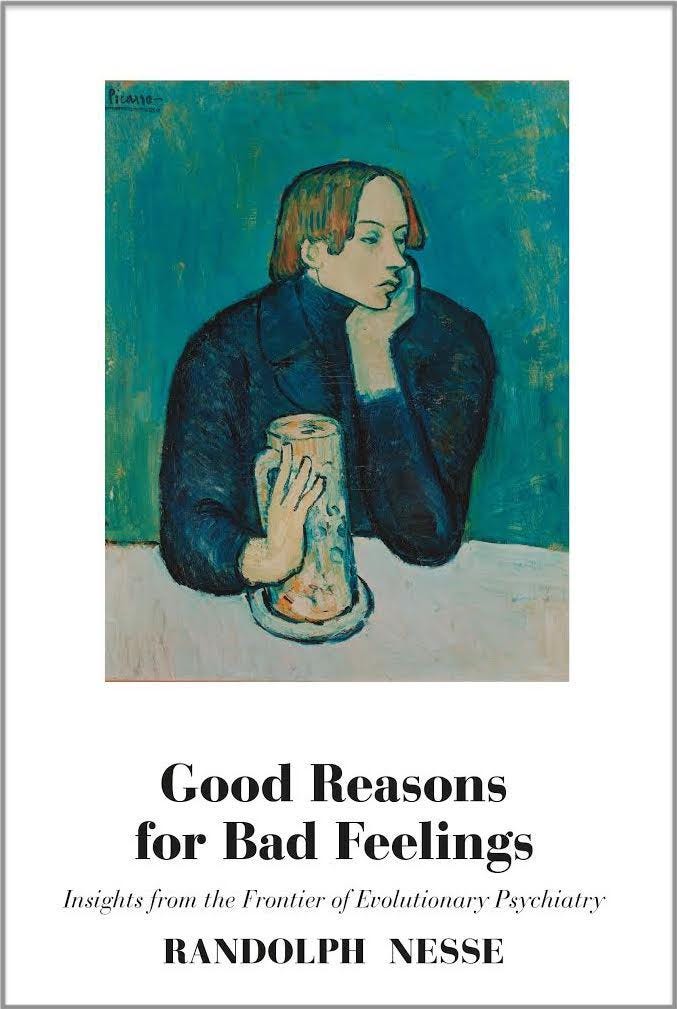
Drug advertisements and other media campaigns often portray depression as a disease that results from a brain abnormality. That framing reduces the stigma associated with viewing depression as a product of insufficient willpower or religious faith and encourages needed research and treatment, but it comes at the cost of making some patients wait passively for a doctor to provide a cure. I still shudder at memories of talking with a very depressed 20-year-old man living isolated in his parents’ basement who came to our clinic saying “I have tried five medications, and nothing has helped. The University is my last hope.” When I asked about his life situation and suggested other treatments he insisted, “Depression is a brain disease, I will just have to wait until some new drug is discovered.”
Some depression does arise from brain abnormalities and antidepressants can be helpful, but depression is not a specific disease with a specific cause, it is usually a dysregulated extreme of the normal capacity for low mood. It exists for the same reason as other protective responses like cough and fever. It is painful for the same reason that all defensive responses are painful—to motivate escape from and avoidance of situations that cause harm.
Antidepressants reduce mental pain the same way that analgesic medications block physical pain, by blocking normal pathways. Acetaminophen, aspirin and other nonsteroidal anti-inflammatory drugs, and opioids block different parts of mechanisms that mediate physical pain. Different antidepressants likewise act on different parts of the mechanisms that mediate low mood and depression. The association of inflammation and depression increases the connection.
Recognition that low mood is useful makes some people conclude that depression should not be treated. That is as ridiculous as saying that we should not treat physical pain because it can be useful. False alarms are cheap compared to the cost of missing a real threat, so selection tunes control systems to be like those in a smoke detector, with many false alarms and excessive responses that can usually be safely blocked. We should make full use of medicine’s capacity to relieve pain while always also looking to see what could be arousing it.
Just as looking for the causes of physical pain is essential, a careful analysis of an individual’s life situation—goals, projects, relationships, hopes, fears, experiences, and beliefs about the self and others—is the essential first step for high quality pharmacological management of depression. That takes an hour and special skills that are not available for the general physicians who write most antidepressant prescriptions. It would be wonderful if psychiatrists were available for all such assessments, but nurses, psychologists and social workers can provide excellent evaluations.
Antidepressants are about as effective for depression as aspirin is for physical pain, that is, modestly effective with large individual differences, big placebo effects, and unavoidable side-effects. The inability of any drug to fully relieve depression or physical pain is vastly disappointing. It is likely explained by how important these responses are. No one molecule or brain locus can be blocked to stop symptoms completely. Control systems for pain and emotions are networked in ways that makes them robust and hard to block.
Everyone recognizes that low mood is sometimes normal, but few take the next step and ask how it can be useful. Even fewer ask how natural selection shaped the capacity for low mood and its control mechanisms. And only a very few ask why natural selection left mood control systems so vulnerable to failure. The answers to those questions will eventually provide the missing foundation for understanding mood disorders, however current efforts to explain depression by proposing one or another function seem to me to be trapped in tacit creationist hopes that each specific emotion has a specific function. More about that in a future essay. For now, wider recognition that that antidepressants relieve mental pain the way aspirin relieves physical pain would be a great advance.