

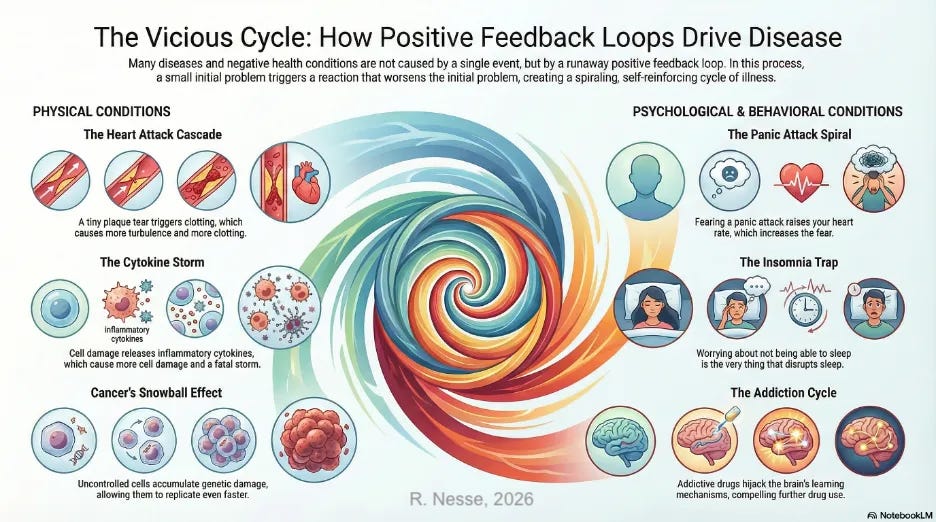
It was only after 10 years as a specialist treating anxiety disorders that I finally realized the central role of runaway positive feedback. The insight was hugely helpful for me and my patients. Since then, my thinking has expanded, even snowballed!, to consider the role of vicious cycles in many other diseases. The literature has many great specific examples, but no comprehensive review article. I will write one eventually. In the meanwhile, this Nessay offers examples of how runaway positive feedback loops cause disease in hopes of generating interest, comments, and perhaps enough shares to illustrate the positive side of positive feedback!
The standard metaphor for runaway positive feedback is a snowball rolling downhill. With each turn it gets larger and rolls faster, becoming larger and faster yet. Real snowballs almost always collapse as they are getting started, but AI can dramatize the metaphor. Another familiar example is the shriek from a public address system when the microphone feeds output from the speaker back into an amplifier in a vicious cycle that stops only when the mic is moved away from the speakers.

Negative feedback is the opposite of positive feedback, it dampens extremes and stabilizes systems in the process called homeostasis. Negative feedback is not all good and positive feedback is not all bad! In fact most control systems involve positive as well as negative feedback loops. However, those details are for another article, the thesis here is simply that runaway positive feedback is an important cause of disease that deserves much wider recognition.
Disease from runaway positive feedback
We start with the heart
When a tiny flap of atherosclerotic plaque loosens in a coronary artery, it creates turbulence that sets off clot formation, more turbulence, and more clotting in a positive feedback loop that blocks the artery and causes a heart attack.
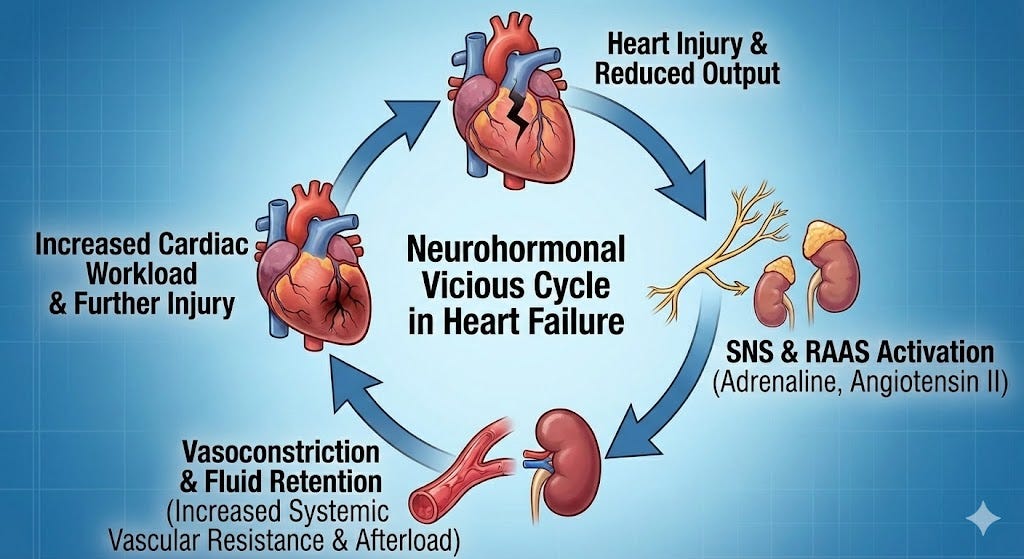
Recognition of the role of positive feedback in cardiac failure is now improving clinical care. Insufficient cardiac output, for any number of reasons, causes vasoconstriction and fluid retention that further compromises output in a vicious cycle.
Inflammation and immune responses
These defensive responses are intrinsically vulnerable to runaway pathology because inflammation can cause damage that causes more inflammation, because their regulation mechanisms usually include an initial positive feedback boost to get them up and running fast, and, as Steve Frank has noted, because intense competition with pathogens creates peaked fitness functions that make even optimal responses costly.
The scratch—itch cycle is common and often hard to control.
Skin damage → inflammation → itching → scratching that damages skin more.
Cytokine storm is far more serious. Cell damage releases cytokines that can create more damage and more cytokine release in a vicious cycle that was responsible for many deaths in COVID-19. Most studies using steroids to block inflammation still assume everyone is the same, but finding ways to distinguish patients with excess vs. deficient immune responses would save lives.
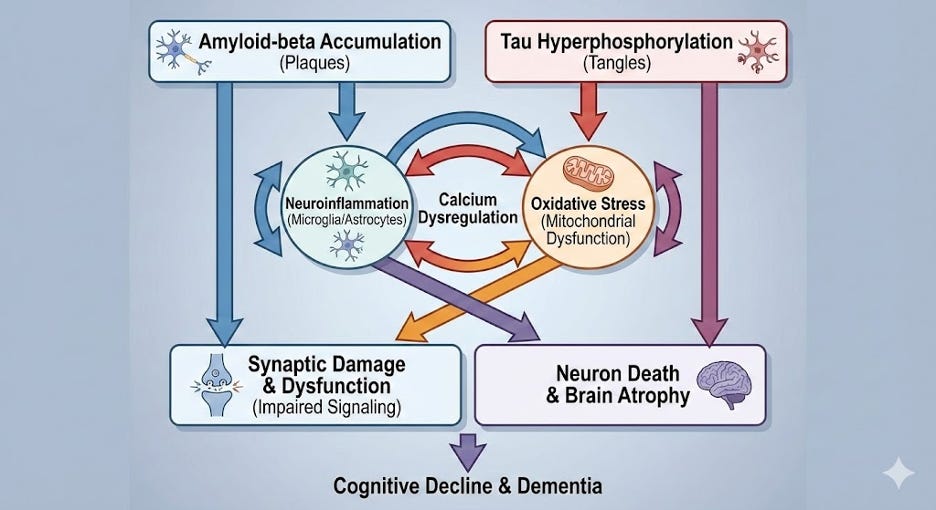
Alzheimer’s disease is a product of useful defenses gone awry. Amyloid-beta is an antimicrobial that causes inflammation that can cause further damage and abnormal protein folding in a runaway process that damages synapses then kills neurons.
Parkinson’s Disease is common. We are all vulnerable because dopamine (DA) is metabolized by monoamine oxidase to 3,4-Dihydroxyphenylacetaldehyde (DOPAL), an aldehyde that damages DA storage vesicles, releasing more DA that is metabolized to more DOPAL, creating more damage.
Appendicitis is an indirect product of inflammation. Initial inflammation at the neck of the appendix compromises its blood supply, allowing bacteria to grow, causing more inflammation, a further reduced blood supply, until growing bacteria burst the appendix.
Systemic lupus erythematosus(SLE) is the product of multiple interacting positive feedback loops that create antibodies to an individual’s DNA. Failure to fully clean up after normal cell death exposes DNA to B cells that make antibodies that bind them and create immune complexes that create inflammation in small vessels in the kidneys, skin, joints and the heart, releasing complement that causes further damage and DNA exposure.
Behavioral and emotional disorders
Anxiety disorders was my starting point. Positive feedback is central to their pathophysiology.
Performance anxiety is mostly a product of vicious cycles. Fear of being able to urinate in a public bathroom, causes inhibition of the parasympathetic system, making urination impossible. Fear of being impotent is self-reinforcing by the same route. Fear of speaking in public, can cause sweating, shaking and voice quivering that disrupt performance and make the next attempt more difficult yet. Sharing these principles is essential for helping patients to understand how behavior therapy works to disrupt vicious cycles and why exposure therapy is essential, despite being difficult and anxiety-provoking.
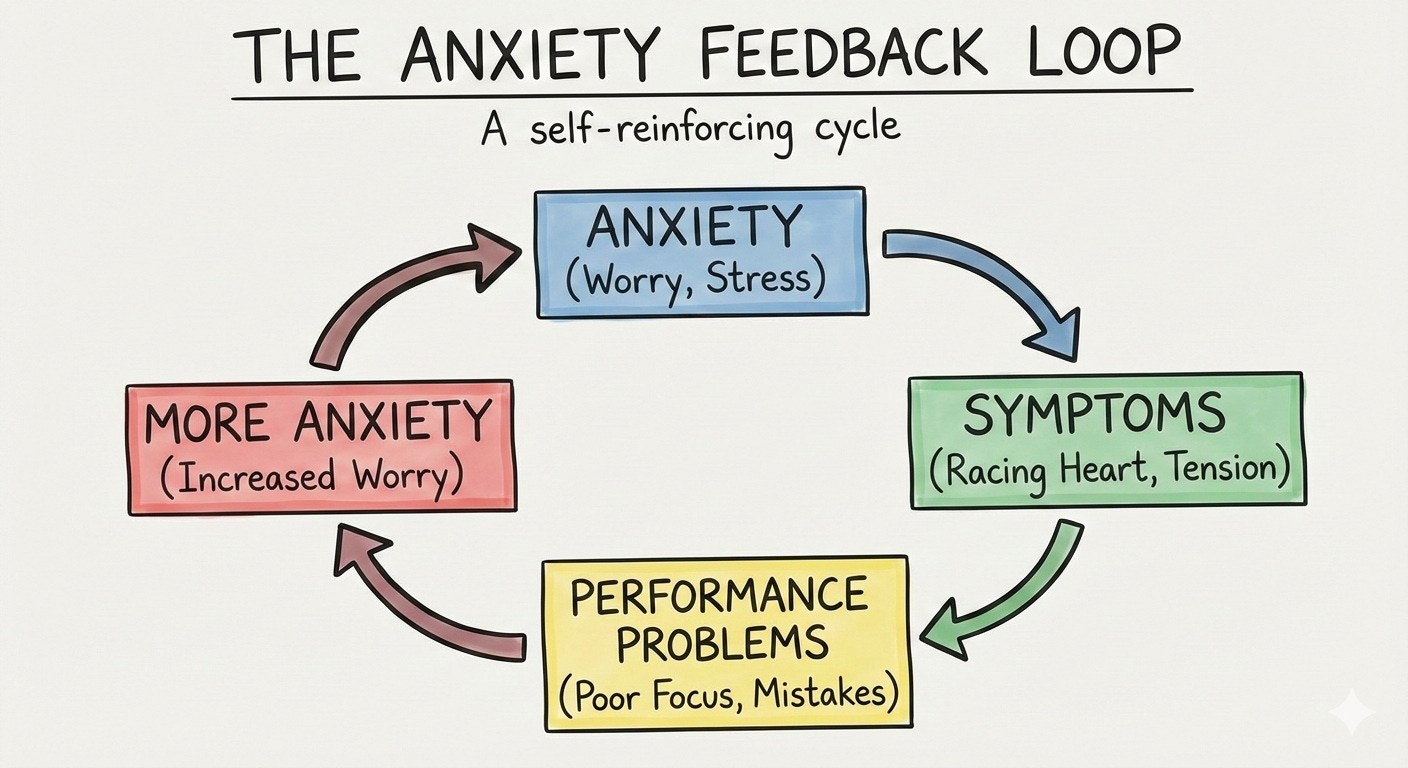
Panic disorder often results from fear of fear. Even a slight increase in heart rate can make a person anxious about the possibility that a panic attack is coming, the anxiety makes heart rate go up further and creates additional symptoms that escalate into a full-blown panic attack. The smoke detector principle explains why false alarms in the panic control system are common and normal; when a danger might or might not be actually present, then expressing the protective response can be far less costly than the risk of catastrophic outcome if it is not expressed. Such signal detection analysis has yet to be applied routinely to other physiological defensive responses.
Addiction is the straightforward outcome of positive feedback. Drugs that hijack learning mechanisms cause increased drug taking and further brain changes. Withdrawal symptoms are also relevant, but probably less so than the simple effect of drugs on learning mechanisms.
Eating disorders are a tragic example. It seems so straightforward to simply stop eating for a few days to lose weight, but such a restriction triggers famine protection mechanisms that result in uncontrolled gorging, causing increased fear of gaining weight, resetting the body mass set point higher, and subsequent new resolve to more strongly control eating in a vicious cycle that is all too often fatal.
Bipolar disorder results from mood dyscontrol and positive feedback. Cyclothymic individuals have high gain in their mood control system causing fast extreme swings. When the gain is pushed higher yet, the system goes to extreme highs or lows and gets stuck there, in the characteristic control system mode of bistability that characterizes bipolar disorder.
Implications
Taken together, these examples have substantial theoretical implications for how we understand disease. They span diverse organ systems and pathophysiological mechanisms, yet share a common architecture: perturbed protective or regulatory responses amplify rather than dampen dysfunction. Recognizing positive feedback as a fundamental disease mechanism—not just a feature of specific disorders—could transform how we approach research, prevention, and treatment design. The question isn't whether positive feedback matters in disease, but how many conditions we've misunderstood by failing to recognize it.
Recognizing the role of vicious cycles in disease also has practical implications. Positive feedback loops are best disrupted early, before they gain momentum or by imposing powerful negative feedback. Beta-blockers in heart failure interrupt sympathetic amplification. Cognitive therapy for anxiety works by repeatedly exposing patients to feared situations without catastrophic outcomes, weakening the fear-symptom connection. For patients, understanding feedback mechanisms can be therapeutic—recognizing a vicious cycle often helps to disrupt it. For researchers, recognizing such feedback loops is the crucial first step towards finding strategies for disrupting them.
Many more examples are available, but I'll save them for a longer article in a journal. In the meanwhile, I'd love to hear from people who are interested in the role of control systems and positive feedback in causing disease.

PDF versions of Nessays are available at https://www.randolphnesse.com/nessays
References for additional reading are below
Blithikioti C, Fried EI, Albanese E et al. Reevaluating the brain disease model of addiction. The Lancet Psychiatry 2025;12:469–74.
Frank SA. Disease from opposing forces in regulatory control. Evolution, Medicine, and Public Health 2023;11:348–52.
Goldstein, D. S. (2020). “Sick-but-not-dead”: Multiple paths to catecholamine deficiency in Lewy body diseases. Stress, 23(6), 633–637. https://doi.org/10.1080/10253890.2020.1765158
Goldstein J. Attractors and Nonlinear Dynamical Systems. 2011.
Kitano H. Violations of robustness trade‐offs. Molecular Systems Biology 2010;6:384.
Mackey MC, Glass L. Oscillation and Chaos in Physiological Control Systems. Science 1977;197:287–9.
Nesse, R. M., Labov, J. B., & Madhavan, G. (2025). Explanations for failures in designed and evolved systems. PNAS Nexus, 4(4), pgaf086. https://doi.org/10.1093/pnasnexus/pgaf086
Nesse, R. M. (2023). Evolutionary psychiatry: Foundations, progress and challenges. World Psychiatry, 22(2), 177–202. https://doi.org/10.1002/wps.21072
Nunes A, Singh S, Allman J et al. A critical evaluation of dynamical systems models of bipolar disorder. Transl Psychiatry 2022;12:416.
Packer M. The neurohormonal hypothesis: A theory to explain the mechanism of disease progression in heart failure. Journal of the American College of Cardiology 1992;20:248–54.
Shlomchik MJ, Craft JE, Mamula MJ. From T to B and back again: positive feedback in systemic autoimmune disease. Nat Rev Immunol 2001;1:147–53.
Tang L, Yin Z, Hu Y et al. Controlling Cytokine Storm Is Vital in COVID-19. Front Immunol 2020;11:570993.
Indeed, +ve does not always mean good and -ve does not always mean bad. Like the +ve +ve loop of bulbospongiosus tumescence vs the -ve +ve loop of simiar constricted flows in IIH.
These loops operate from a molecular level up to societal. A major reason behind Brexit was +ve and -ve feedback loops relating to selective migration.
As a therapist working with clients who have high levels of anxiety, the concept of the positive feedback loop and the smoke detector principal has been immensely helpful! Thank you so much for your work.